
BHUBANESWAR: On Saturday, the state cabinet granted approval for a Bill aimed at amending the Odisha Development Authorities (ODA) Act of 1982. This amendment is intended to create Economic Region Development Authorities (ERDAs) that will facilitate integrated planning and development across key urban and industrial corridors in the state.
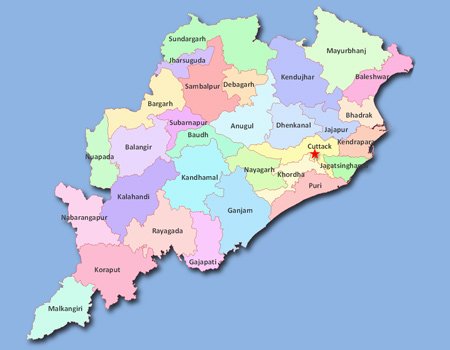
The proposed Odisha Development Authorities (Amendment) Bill, 2026, is designed to establish a legal framework for the formation of ERDAs, starting with the Bhubaneswar-Cuttack-Puri-Paradip Economic Region (BCPPER). This area has been selected as a pilot for the City Economic Region initiative, as stated by Chief Secretary Anu Garg during her post-cabinet meeting briefing.
This amendment is in line with the state’s Vision 2036 and Vision 2047 plans, which aim to leverage urbanization as a significant driver of economic growth. The plans advocate for the development of urban agglomerations into integrated economic corridors featuring modern infrastructure, efficient transportation, job creation, and coordinated public services.
In addition to BCPPER, other urban agglomerations such as Bargarh-Jharsuguda-Sambalpur, Berhampur-Chhatrapur-Gopalpur, and Jeypore-Koraput-Sunabeda have also been earmarked for gradual development as economic regions.
According to Garg, an economic blueprint for BCPPER has already been crafted in collaboration with NITI Aayog. Notably, this region was acknowledged in the 2026-27 Union budget as one of four city economic regions identified nationally as vital to future economic growth, alongside Varanasi, Surat, and Visakhapatnam.
The Bill aims to amend section 2 of the ODA Act by including new definitions for “Economic Region” and “Economic Region Development Authority,” as well as introducing a new chapter IIA. These new provisions will allow the state government to establish ERDAs without the need for separate legislation for each economic region.
ERDAs will function as comprehensive statutory entities that coordinate the activities of various development authorities within an economic region. This structure will promote integrated planning across municipal lines, facilitate tailored economic and master plans, enhance infrastructure, housing, logistics, and mobility, attract investments, create jobs, and ensure the effective provision of public services.