Jharsuguda: In an innovative effort to enhance women’s health in both workplaces and public settings, the Jharsuguda district administration in Odisha has launched the ‘Abhaya’ initiative.
Led by District Collector Kunal Motiram Chavan, this initiative sees Jharsuguda joining other regions in Odisha to deploy a comprehensive network of automated sanitary napkin dispensers and safe disposal incinerators in government facilities and public offices.
Over the last ten years, similar initiatives have been introduced in select areas of Cuttack, Bhubaneswar, and Sambalpur, and more recently in various districts, including Nayagarh.
Officials emphasize that menstrual hygiene is a vital public health concern in India, where many women in their reproductive years encounter obstacles in obtaining safe sanitary products due to financial limitations, enduring social stigmas, and inadequate access during emergencies outside their homes. The Abhaya initiative aims to address these challenges by fostering clean and supportive civic environments for young girls, working women, and visitors.
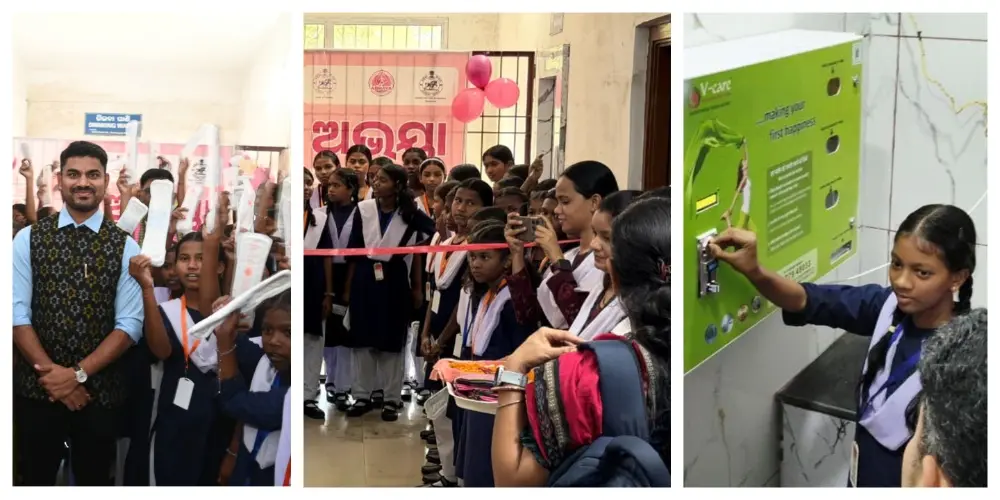
In a meaningful and forward-thinking gesture, two female students from Beheramal Ashram School in Jharsuguda inaugurated the automated sanitary napkin dispenser and incinerator unit. This act symbolizes the breaking of menstrual taboos and underscores that the true beneficiaries of such public welfare initiatives are the district’s daughters.
Collector Chavan reiterated the administration’s pledge to prioritize women’s welfare, stating, “Access to safe menstrual hygiene should never be an afterthought, an inconvenience, or a barrier to a woman’s professional and academic aspirations. Through ‘Abhaya (Fearless workdays, Dignity in every space)’, our vision is straightforward yet revolutionary: dignity, health, and comfort in every public area. When a young student visits our public library or an employee comes to work, emergency period care must be readily available without stigma, delay, or embarrassment. By providing affordable vending machines alongside incinerators, we not only promote personal health but also guarantee dignified working conditions for our sanitation workers.”
Real Impact
The early deployment of this initiative at significant community sites, such as the Zilla Pathagar (District Library) and Sanskruti Bhavan, is already yielding noticeable benefits. Female students traveling long distances to prepare for competitive exams have welcomed this intervention.
For Students & Teenagers:
Female students commuting 7 to 10 kilometers daily for 8 to 10 hours in academic centers like the District Library previously experienced anxiety and lost study time during unexpected menstrual cycles. Chiki Majhi, a civil services aspirant studying at the District Library, expressed, “Many of us travel 7 to 10 kilometers every single day to study here for 8 to 10 hours straight. When periods come unexpectedly, the panic was overwhelming; being unprepared, worrying about where to find a pad, and feeling embarrassed disrupted our studies. Now, with the dispenser and incinerator in the washroom, that constant anxiety is alleviated. We can focus on our studies without worrying about emergency access or safe disposal of products.”
Barrier-Free Accessibility:
To ensure easy and dignified access without bureaucratic hurdles, the district administration has acquired standardized V-Care Hygiene dispensing units through the Government e-Marketplace (GeM). The manual token-and-coin system provides immediate emergency supplies at a nominal cost of ₹10 for two quality sanitary pads, making period care accessible for all, including daily wage earners.
End-to-End Eco-Friendly Sanitation:
By pairing each dispenser with a high-efficiency incinerator, the initiative effectively manages menstrual waste. This setup helps to resolve issues such as clogged washroom pipes, overflowing bins, unpleasant odors, and potential infections, while also protecting the dignity and health of sanitation workers by eliminating the hazardous handling of used menstrual products.
Following the initial rollout in administrative offices, the district administration plans to expand the initiative to public libraries and women’s hostels across Jharsuguda.
By embedding emergency menstrual care into everyday infrastructure, Jharsuguda sets a progressive example for the rest of Odisha, ensuring that every girl and woman can participate in work, education, and public life with confidence and dignity.