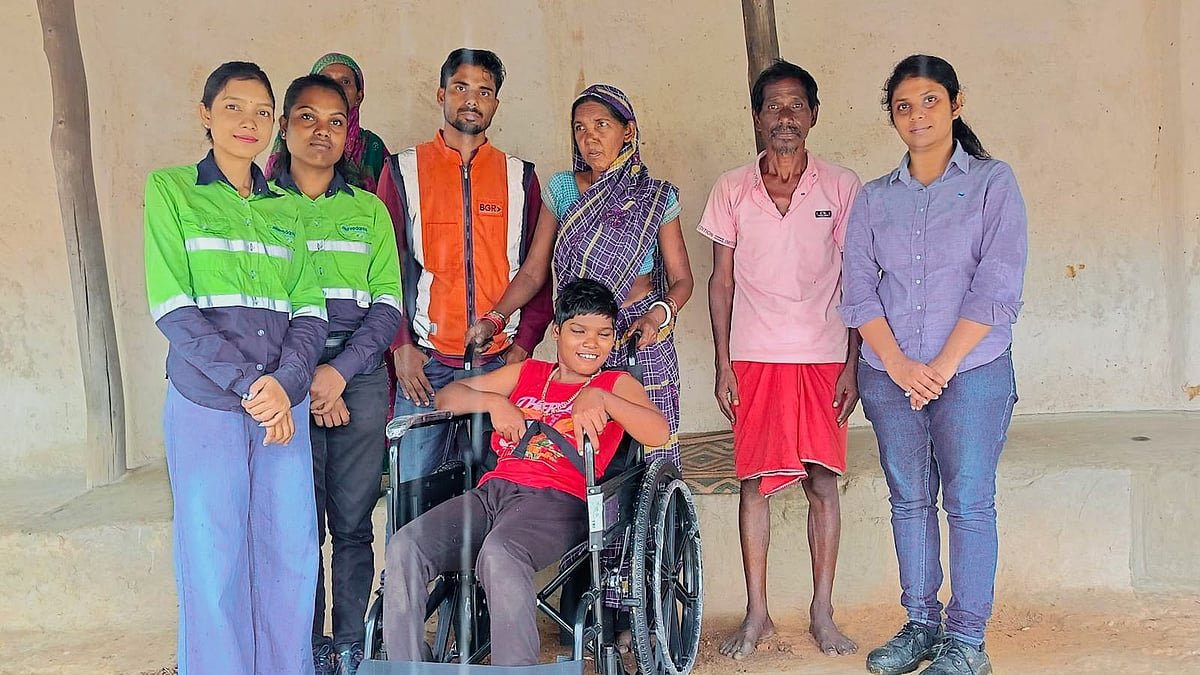
Bhubaneswar: According to a survey conducted for the 2025-26 period by the Social Security and Empowerment of Persons with Disabilities (SSEPD) department, Odisha has identified 18,451 children aged between 0-6 years with disabilities. Koraput district leads with the highest count of such children at 1,500, followed by Mayurbhanj with 1,443, Sundargarh at 1,178, Ganjam with 1,128, and Baleshwar with 1,059. However, the substantial increase in reported cases over the last two years compared to earlier surveys has sparked concerns regarding the accuracy and methodology of the current enumeration.
In the department’s report for 2023-24, Koraput had recorded only 254 children with disabilities, while Nayagarh reported just 80. Notably, no survey was conducted in 2024-25. The latest figures reveal a dramatic rise in Koraput to 1,500 and Nayagarh to 358.
District-wise data for 2025-26 includes: Anugola (450), Balangir (890), Baragarh (383), Bhadrak (302), Boudh (155), Debagarh (162), Dhenkanal (389), Gajapati (350), Jagatsinghpur (268), Jajpur (942), Jharsuguda (195), Kalahandi (923), Kandhamal (800), Cuttack (533), Kendrapara (461), Kendujhar (565), Khordha (663), Malkangiri (440), Nabarangpur (782), Nuapada (628), Puri (376), Rayagada (637), Sambalpur (456), and Subarnapur (289). Among these, Koraput has the highest number of children suffering from sickle cell disease, totaling 139. Additionally, Baragarh and Nabarangpur have reported children with visual impairments, and Ganjam has 172 children with intellectual disabilities, as per the department’s data.
The survey categorizes children with disabilities into various groups. The central government has consistently emphasized the importance of identifying these children to ensure they benefit from government assistance and social security initiatives. It has also issued directives to state governments to facilitate this process. Accurate data is crucial for providing these children with access to education, healthcare, rehabilitation, and other essential services.
Nonetheless, concerns have emerged about the thoroughness of the enumeration process conducted by child welfare officials at the district level. Inaccuracies in the survey could result in many eligible children missing out on vital government support and services. Therefore, it is imperative to verify the district-specific data and examine the discrepancies between the previous and current surveys. Observers have urged the department to take on the responsibility of identifying every child with a disability and ensuring they receive the necessary support and services, rather than solely focusing on gathering statistics.