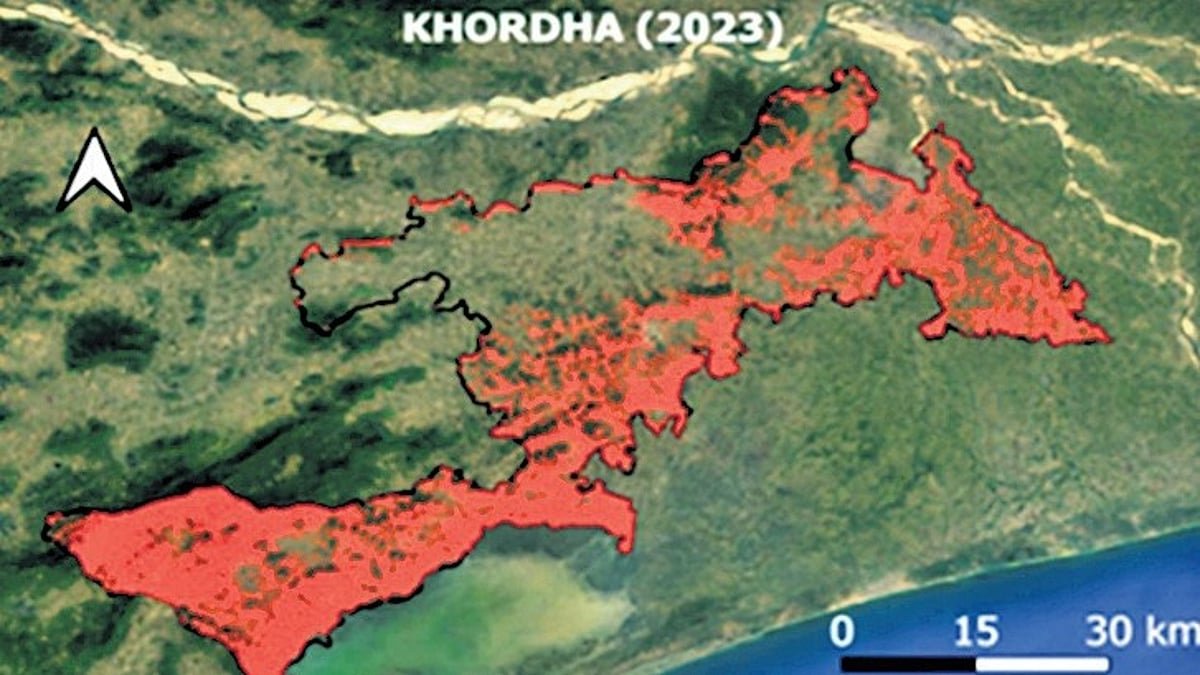
A map illustrates the growing thermal hotspot in Khurda district.
BHUBANESWAR: A study conducted by researchers at the Indian Institute of Technology (IIT) Bhubaneswar indicates that thermal hotspots on land surfaces are proliferating rapidly across Odisha, with certain districts showing an annual increase of up to 9%. This trend is attributed to rapid urban development, industrial growth, and the deterioration of natural landscapes, which are leading to escalating surface temperatures affecting both urban and rural regions.
Published in the journal Environmental Science: Advances by the Royal Society of Chemistry, the research analyzed two decades’ worth of satellite data to chart the development of thermal hotspots across all 30 districts in the state.
The study, led by Dikshika Mahapatra and Dr. Debadatta Swain from the School of Earth, Ocean and Climate Sciences at IIT Bhubaneswar, emphasized the significant impact of land-use changes and urbanization on Odisha’s thermal environment.
Results revealed that districts undergoing rapid urbanization and industrialization, such as Khurda, Ganjam, Cuttack, and Sundargarh, have experienced a steady increase in extreme land surface temperatures, with thermal hotspots expanding between 2% and 9% annually in various coastal areas.
Khurda, Cuttack, Sambalpur, Sundargarh, Angul, and Jharsuguda were identified as having the highest density of hotspots over built environments, where heat-retaining surfaces like concrete and asphalt, coupled with dense infrastructure, contribute to elevated daytime temperatures.
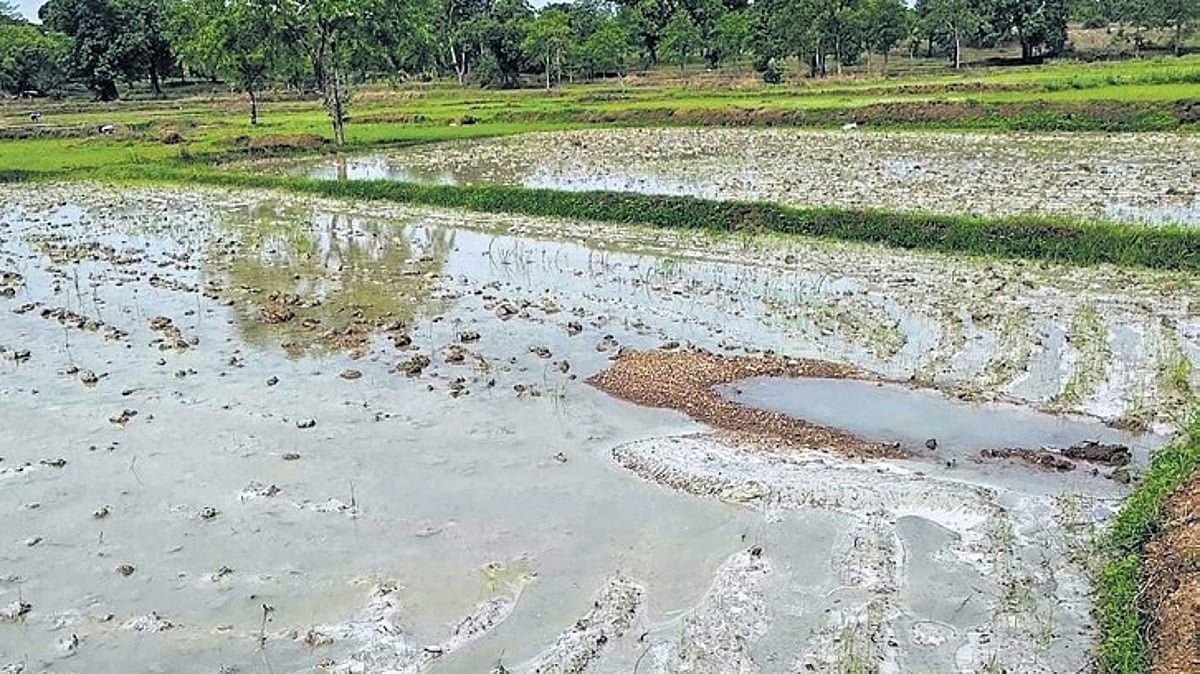
Moreover, the study discovered that the rise in heat is not limited to urban areas. Interior and western districts, including Bargarh, Balangir, Kalahandi, and Nuapada, have also seen an increase in thermal hotspots in non-urban regions due to the growth of barren land, fallow agricultural fields, and forest degradation.